
Tuesday, June 08, 2004




Monday, June 07, 2004





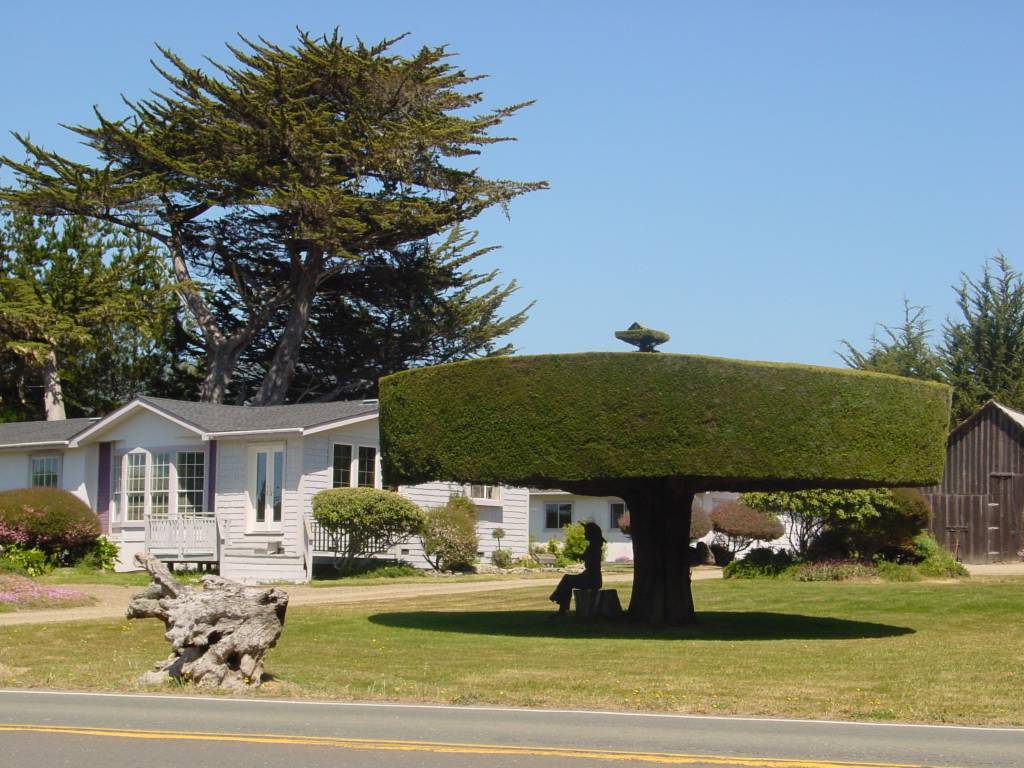

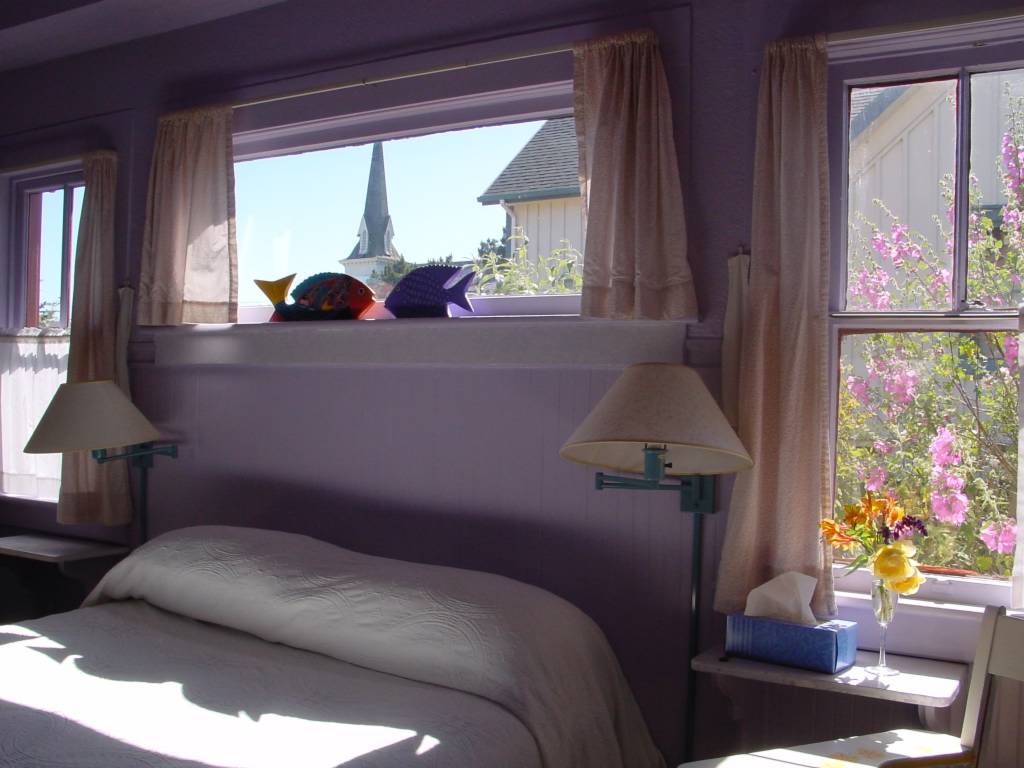
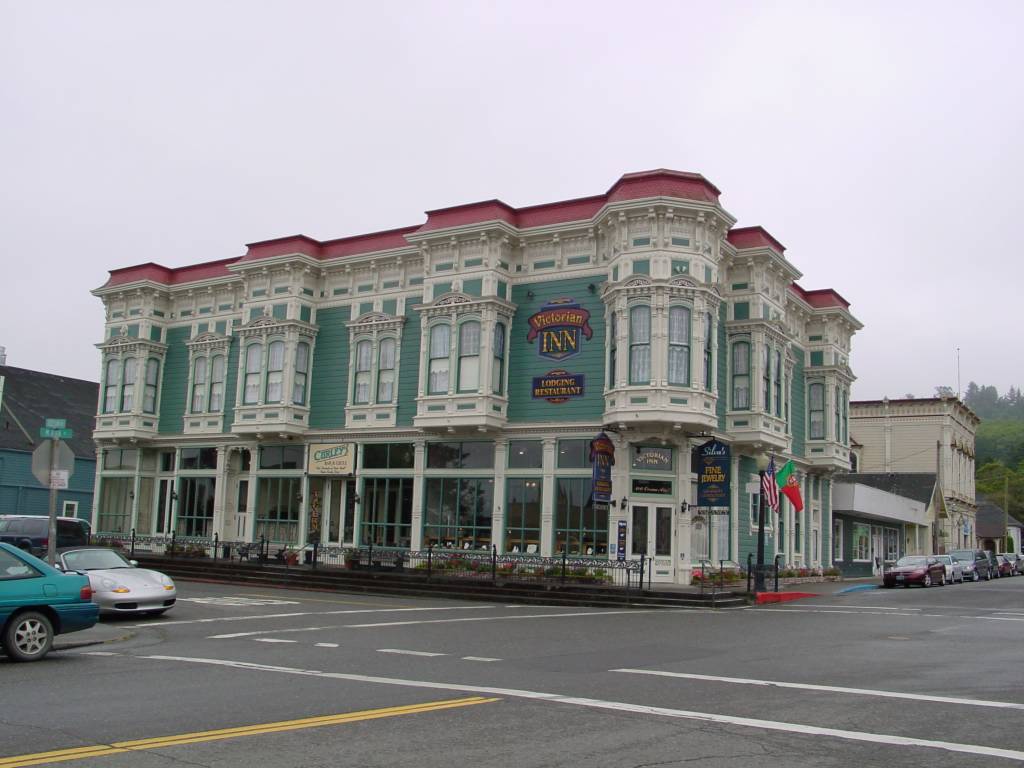
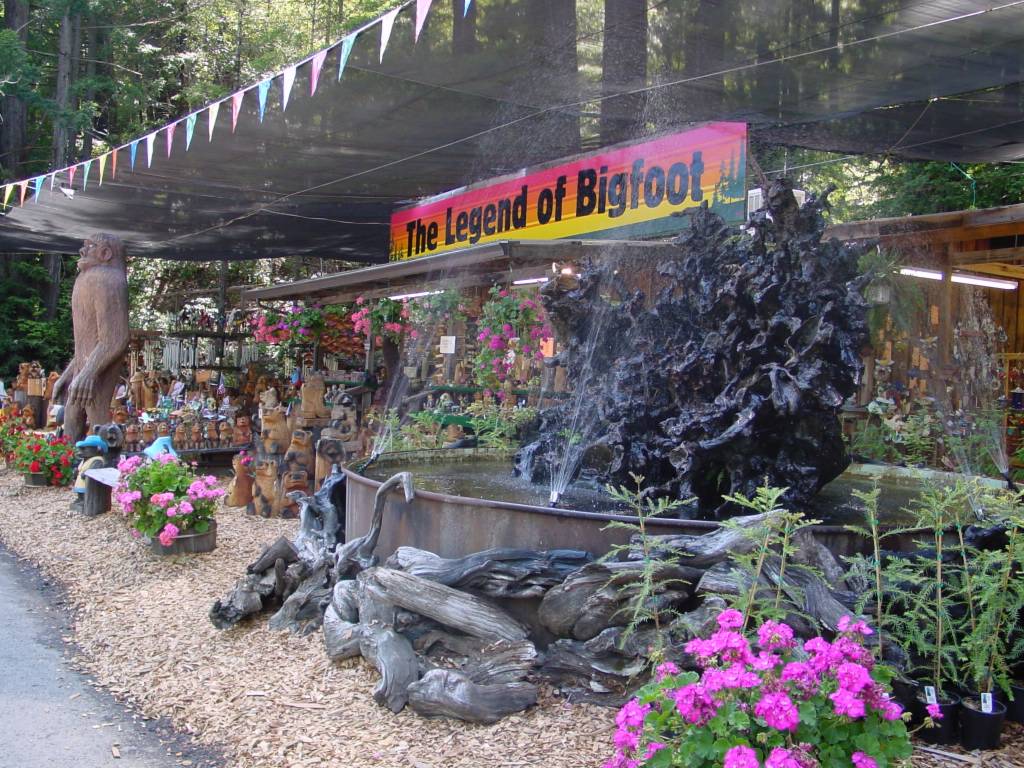
Mendocino, CA. Typical "water-tower" houses. They all look like there should be a windmill on top. Maybe they did at some point. The place is too quaint for its own good. Eat at Cafe Beaujolais or the Mousse Cafe: they are NOT "cafes", but full-blown French restaurants (with prices to match), but quite good.


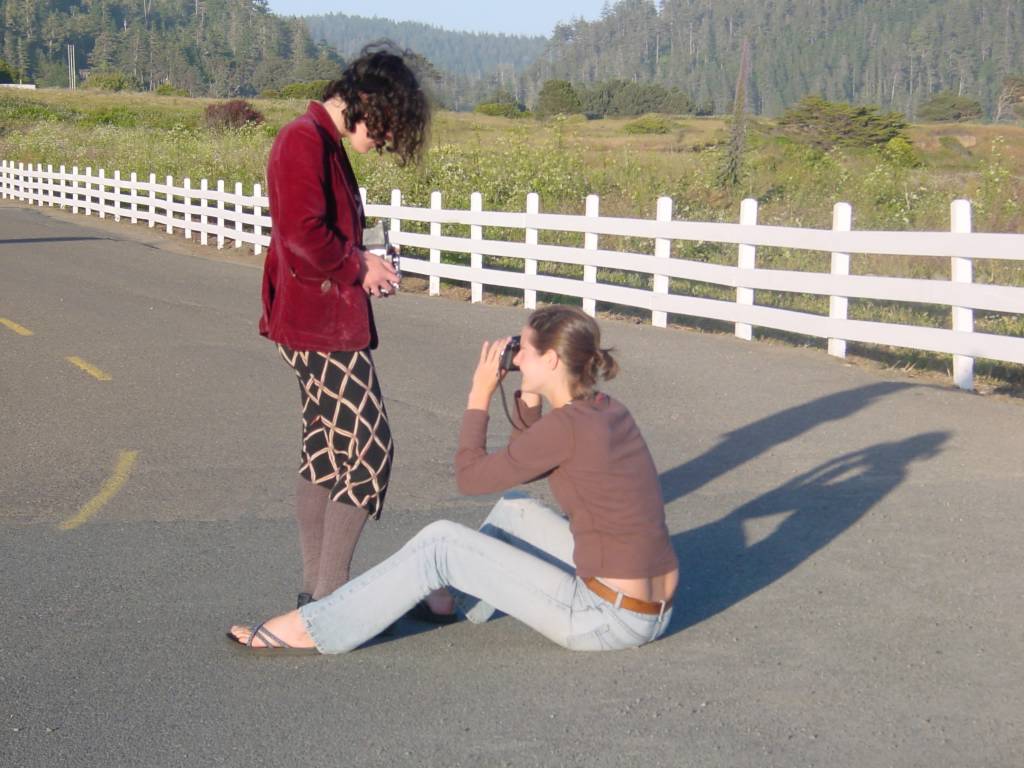
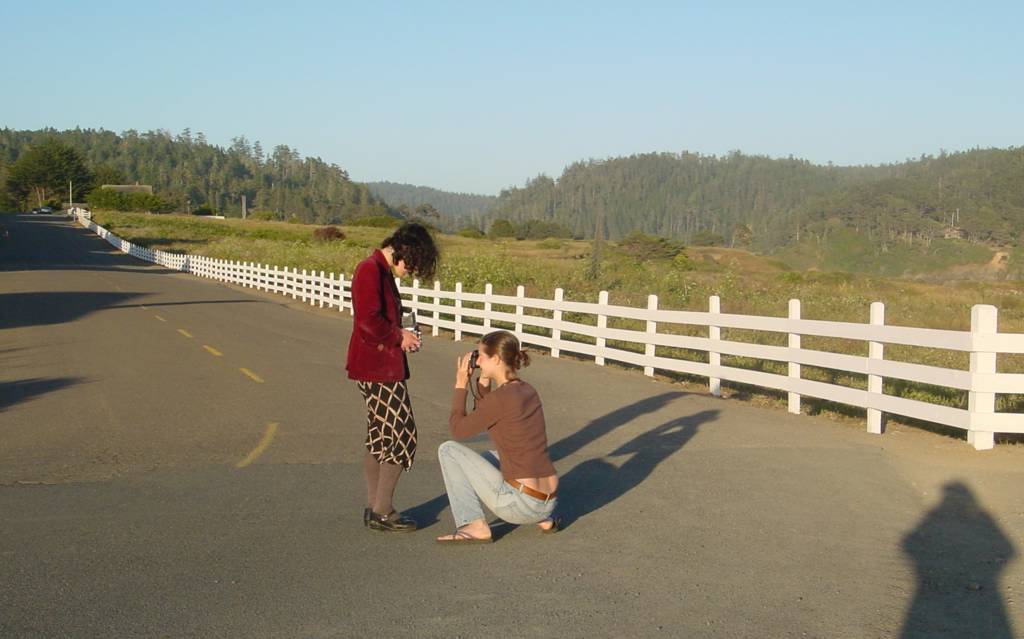



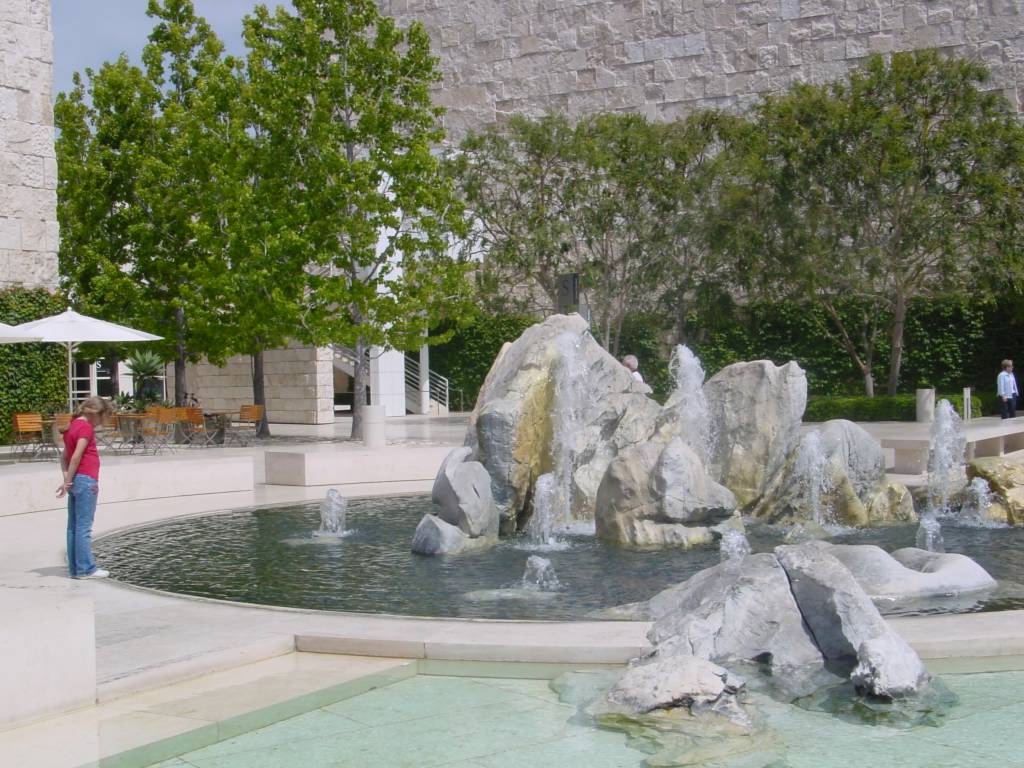
Over-zealous Asian tourist photographing a light-rail station? (Yeah, yeah: "pot calling the kettle black") No, and it's clearly not any of the SEPTA stations (hah!) in Phila....It's the tramway for those too lazy or unable to take a 15 minute walk up a gentle incline from the parking lots to The Getty Center in the hills above LA. (I took it because it was raining. Really.)


The only way to get a good photo of the Getty Center complex is from the air. This is not from the air. There is someting antiseptic about it despite the great care about landscaping, layout, fountains, and use of organic materials, eg. rough-faced stone, "reech Coreenthian leather" (just kidding), etc. It feels like a grown-ups' Disneyland with watchful volunteers in little vests everywhere and a cafeteria that has separate counters for hot food, Mexican food, sandwiches, wraps/salads, sushi (just kidding - don't know how they missed that one)... Considering how often the Museum is in the news as affecting the art market because of its financial resources, I was not as excited/impressed as I had expected to be.





White House Ruins, Canyon de Chelly, Arizona. Parts of the Canyon have been continuously inhabited for 800+ years. It is also sprinkled with ruins of the Ancestral Puebloans, like this one (called "White House because the dwelling at the center has traces of white-wash, as you can see -- click on the photo to enlarge). For a sense of scale, the ruins in the cleft of the cliff face are 3-4 stories high. The cliff continues upwards (and curving slightly outward) for several HUNDRED feet and to the left and right as far as the eye can see. (See other photo(s).)


Natchez, Miss - Twice a year, the town has "The Pilgrimage", when restored private homes are also opened to tours and there are dances, etc. to celebrate the pageantry of a lost way of life. A King and Queen and Court are selected for the main Ball. These are the gowns/costumes from a past Ball. ( I'm all for remembering the past, but I think it's a mistake to have the "King" wear a Confederate uniform. For one thing, it's a little strange since the pre-Civil War period, which is the one they are celebrating, by DEFINITION didn't Civil War uniforms, duh!


The sad side of Natchez, Miss. This is one in a row of abandoned houses on Canal Street along the waterfront. The town lost all of its industrial base and hasn't quite re-made itself into a full-functioning tourist attraction. So, ante-bellum mansions, both restored and awaiting $$, co-exist with run-down housing stock and high unemployment.


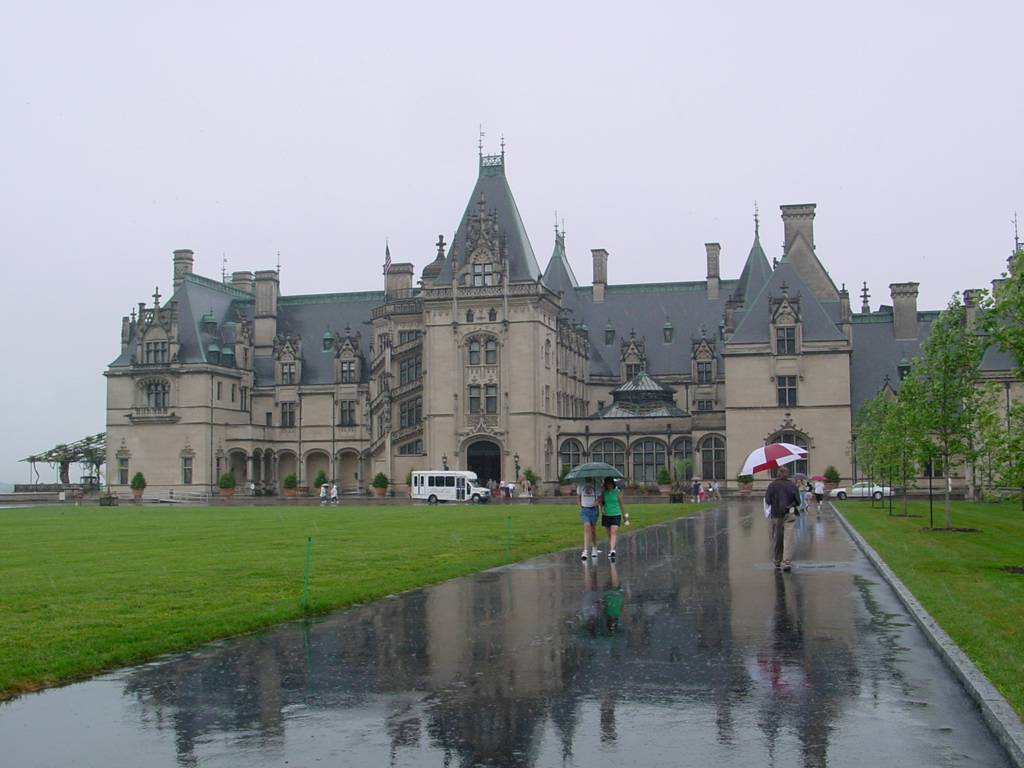
Biltmore House, the largest private home in the USA -- has 255 rooms -- built by one of the Vanderbilts. I would have enjoyed the walking trails, gardens, vineyard, and landscaping if it had been dry...The house-tour (and the furnishings) are unimpressive given how much moolah the man had. (See earlier entry about the visit.)


Me, Kimberly, my Globalfreeloaders.com host in Las Vegas, and Dan, the Canadian chemical engineer cum poker player who was also staying there. Dan was on his last stop of a 6 month+ trip around the world. We played Blackjack (and won) at the most down-and-out casino in Las Vegas: it had penny slot machines!



(A small digression.)
June 6, which ended few hours ago, is the 60th Anniversary of the Allied landings in Normandy. It’s also the 40th anniversary of my mother and I arriving in New York on an overnight flight from Rio de Janeiro, Brazil. I was twelve and half years old. My hand-luggage was my violin and a package of decorative display plates made of colorful butterfly wings arranged in geometric patterns, on which my mother had spent our last hyper-inflated Brazilian currency.
I had a buzz (!) haircut, knew a few phrases in English, and hadn’t seen my father in two years. He picked us up at Kennedy Airport – it may still have been called Idlewild – and we drove to Highland Park, NJ, about an hour away, in his blue 1963 Rambler American (which would later be known as “The Blue Box” by my friends when we got drivers’ licenses). I had never been on a four-lane highway, eaten potato chips, or had soft ice-cream. My total life-time hours of TV watching was less than ten hours, all of them in the week before departure, when we stayed with friends in the state capital, where there was TV reception. I would get to see the 1964 New York World’s Fair that my friends and I had read so much about. I would never see most of those friends again.
I thought about the above (and more) on the six hours of road today between Portland, OR and Lewiston, ID.
I will be spending Monday (June 7) on a 200 mile jet-boat trip up The Snake River that go to Deep Creek and Robinson’s Gulch, the sites, in 1887, of the worse massacre of Chinese in American history. (I mentioned, in one of the early entries, that this was going to be a highlight of my trip and why.) Those thirty-some miners came to America, leaving their families behind, much in the same way as my father had done, and for the same reason: to make a better life for their loved ones at enormous personal sacrifice. The difference is that he had the probability that his family would eventually be able to join him, whereas those miners did not. Instead, they died a violent and horrific death far from home and without their families ever knowing what befell them. They also received no justice from the system then and to this date, given the neglect and subsequent cover-up of the history of this heinous act. There is not even a historical marker at the site.
I was going to write that it’s debatable whether my parents’ ostensible reason for immigrating to the United States -- to give me, their only one child, a better future – was successful or not. Compared to the fate of those miners, it was. And it’s worth celebrating one and memorializing the other.
June 6, which ended few hours ago, is the 60th Anniversary of the Allied landings in Normandy. It’s also the 40th anniversary of my mother and I arriving in New York on an overnight flight from Rio de Janeiro, Brazil. I was twelve and half years old. My hand-luggage was my violin and a package of decorative display plates made of colorful butterfly wings arranged in geometric patterns, on which my mother had spent our last hyper-inflated Brazilian currency.
I had a buzz (!) haircut, knew a few phrases in English, and hadn’t seen my father in two years. He picked us up at Kennedy Airport – it may still have been called Idlewild – and we drove to Highland Park, NJ, about an hour away, in his blue 1963 Rambler American (which would later be known as “The Blue Box” by my friends when we got drivers’ licenses). I had never been on a four-lane highway, eaten potato chips, or had soft ice-cream. My total life-time hours of TV watching was less than ten hours, all of them in the week before departure, when we stayed with friends in the state capital, where there was TV reception. I would get to see the 1964 New York World’s Fair that my friends and I had read so much about. I would never see most of those friends again.
I thought about the above (and more) on the six hours of road today between Portland, OR and Lewiston, ID.
I will be spending Monday (June 7) on a 200 mile jet-boat trip up The Snake River that go to Deep Creek and Robinson’s Gulch, the sites, in 1887, of the worse massacre of Chinese in American history. (I mentioned, in one of the early entries, that this was going to be a highlight of my trip and why.) Those thirty-some miners came to America, leaving their families behind, much in the same way as my father had done, and for the same reason: to make a better life for their loved ones at enormous personal sacrifice. The difference is that he had the probability that his family would eventually be able to join him, whereas those miners did not. Instead, they died a violent and horrific death far from home and without their families ever knowing what befell them. They also received no justice from the system then and to this date, given the neglect and subsequent cover-up of the history of this heinous act. There is not even a historical marker at the site.
I was going to write that it’s debatable whether my parents’ ostensible reason for immigrating to the United States -- to give me, their only one child, a better future – was successful or not. Compared to the fate of those miners, it was. And it’s worth celebrating one and memorializing the other.
Saturday, June 05, 2004
Catch up post-Carmel
(Sometime during yesterday’s drive from Ferndale on the northern California coast to Ashland, OR, my direction turned eastward for the first time since starting out twenty-three days ago. It’s still a long way from Philadelphia, but I’m homeward bound, even though Eugene and Portland are still ahead and northward.)
On Thursday night, I saw a production of “The Comedy of Errors” at the Oregon Shakespeare Festival in Ashland, where my seat was the boundary between a group of thirty-eight seventh-graders from Richmond, CA and twenty-seven eighth-graders from Santa Cruz. Contrary to how you might expect this to continue -- given that opening sentence – they were very well-behaved, once seated and during the show. However, it was a different story in the ubiquitous gift-shop beforehand. There, they ran somewhere between “amok” and “unsupervised”. The few chaperones I could see confined themselves to saying: “This isn’t the only store we’ll be going to” and “You don’t have to spend all your money in one place”. The volunteer sales staff, mostly older ladies of genteel breeding (as they used to say), gave murderous looks but shed no blood. I paid for my purchase and hurried out, wondering what it would be like inside. (While selecting a T-shirt, I chatted with a goateed man who had seen Kenneth Branagh (sic) do Henry IV at Stratford-upon-Avon in 1984 AND caught caught an apple-core thrown to the pit audience during an “As You Like It” production at “The Globe” in London. He kept it as a memento. (My ticket-stub to “Taming of the Shrew” there last August hasn’t shrivelled or browned…)
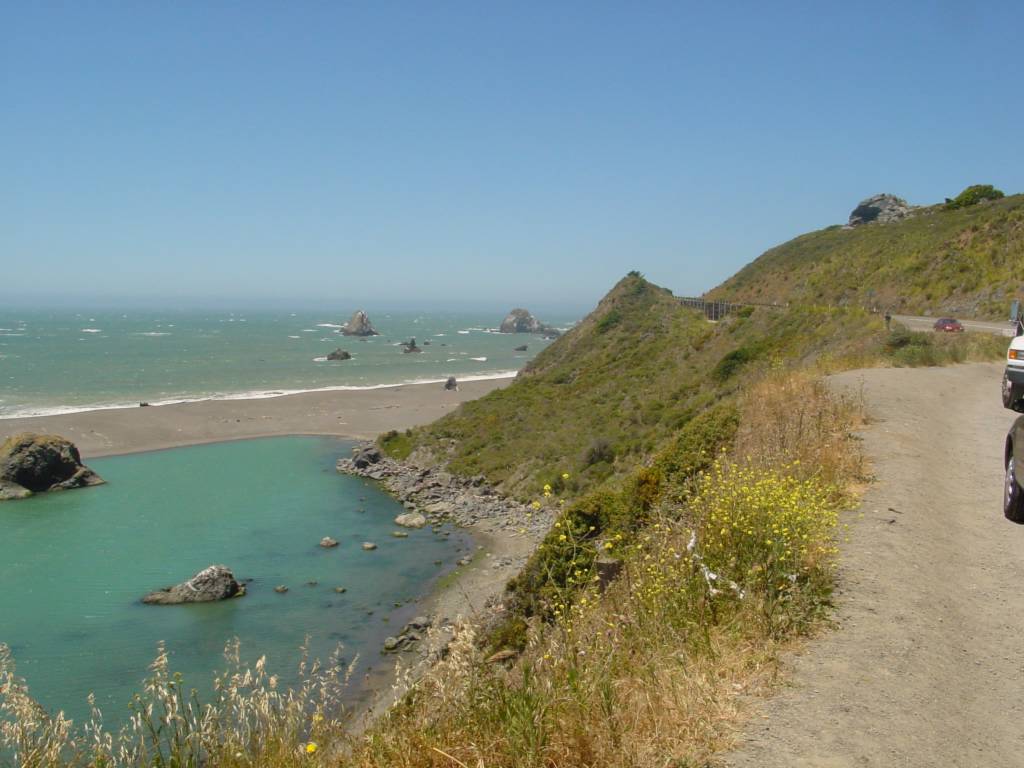
The last few days, since the wedding in Monterey on Sunday, most of the drive has been on the northern stretch of the Highway 1, from Point Reyes near San Francisco to Crescent City, close to the border with Oregon, some 200+ miles. The scenery is even more spectacular than the section in southern California, as it includes old-growth redwood forests. (A video I watched at the Redwoods National Park information center showed that only 5% remains of the redwood groves that covered California before logging from the Gold Rush (1849) onwards.)
In particular, the 32 mile drive called “Avenue of the Giants” is not to be missed. It’s a two-lane road flanked by trees averaging over 200 ft. in height, some with trunks wider than the longest SUVs. (The bark alone, in the older ones that are as much as 2000 years old, is up to 18 inches thick.) Photos don’t do them justice without placing a person for scale. For long stretches, mine was the only car in sight, and riding with the top down I could feel the full effect of their majesty. The sunlight had to zig-zag such a long way through the leaves to reach ground-level that it would hard to tell the time of day by the speckled shadows. And when I stopped beside a toppled tree, whose cross-section was taller than the top of a basketball backboard, and shut the engine, the stillness, until a car went by a minute or so later, was eerie. I felt very, very small and like an intruder.
Looking at the rings of that redwood tree brought thoughts about Carlsbad Caverns, and time-scales in the animal, vegetable, and mineral kingdoms. A thousand years in the formation of a staglamatite barely makes it noticeable, no more than a wet bump. For a redwood, the same amount of time produces a specimen that is the equivalent of an “emerging adult” in human terms. For us, “a thousand years” has no meaning for an individual life. It’s no wonder that I felt both very mortal yet also awed by how a creature of such limited lifespan, which is not even the longest in the animal kingdom, can disrupt and destroy the lives of all species AND the physical world. Makes me proud to be a homo sapiens….
I also noticed a different set of reactions driving through this northern hilly and forested landscape versus the open and sparsely vegetated Southwest. Both environments have many places where the scenery stretches for miles in almost every direction, and where the viewer feels the way the Devil intended Jesus to feel when he tempted Him in the desert: like a king surveying his domain. Yet, while the vistas of green hills dropping down to rivers winding through cultivated valleys did, indeed, give that feeling of awed “ownership”, the Southwest sights of canyons, mesas, red hills, and junipers and sagebrush evoked a sense of awe and futility.
Reflecting that difference, I realized that it had to do with man’s control over Nature. How I felt depended on how much I felt the environment could be controlled: forests are easier to raze than deserts are to make bloom. It was that simple. It may be that obvious to others, but it wasn’t to me, until that moment, how that kind of a Man-centered view, is not necessarily a good way to look at the world.
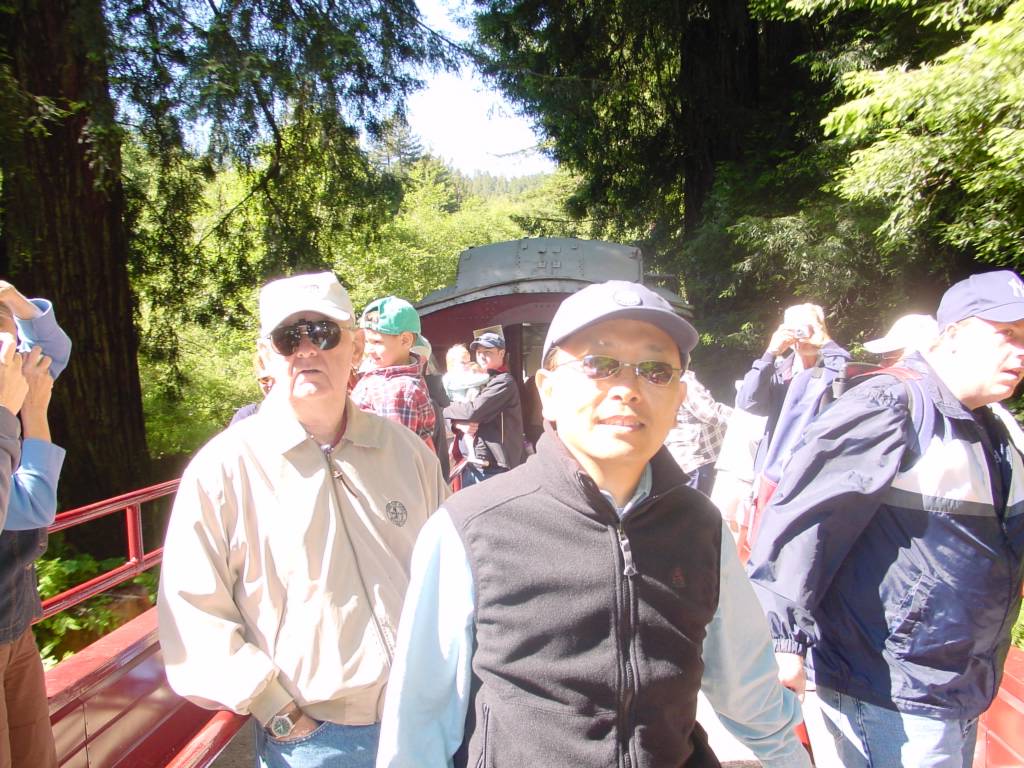
A road-story. On the way to Mendocino on Tuesday, I stopped to eat a sandwich at the roadside tables of a gift shop in a little widening of Highway 1 called Jenner, CA, 95450, and offered to take a photo of a young couple with a baby. We exchanged no more than a dozen words and they left me to eat my sandwich in the company of a pelican. (“Fred” – he looked like a “Fred” – liked the wheat bread, the red onion, and the turkey breast I shared with him. He also became bolder as lunch progressed.) A few hours later, as I was unloading my luggage at McElvoy’s Inn in Mendocino, the same couple emerged from the room next to mine. We exchanged another dozen words about “what a small world” and went our separate ways, though not before I did do my parlor-trick of guessing baby ages – I guessed 16 months and he was 14 months. (For those who know child development, that’s NOT too bad a guess.)
The next morning, as I was loading the car for the drive to Ferndale, I saw the young woman and the baby. In the dozen words that included asking where they were headed, she said: “To Fort Bragg to take the ‘Skunk Train’.” “What’s that?”, I asked. “Oh, it’s a steam-engine excursion train that goes into the redwoods.”, she replied. “How long is the trip?”, I asked. “It leaves at 9:30am and returns to Fort Bragg at 1 pm.”, she said. (It was now 8:50 am and Fort Bragg was about 15 minutes away.) “I never heard of it. Sound pretty neat. Thanks! Maybe I’ll see you there.”, I answered. “OK, see you!”, and she left. I did a quick review of my plans for the day (none) and calculated whether I had the time to still get to Ferndale before dark (yes). I made the train with five minutes to spare, including parking and purchasing a ticket.
The couple, whose names I never got, were taking a month to travel, having quit their jobs in Indiana to move back to the Twin Cities area of Minnesota. He was a Lutheran minister doing youth ministry and was planning to get a PhD in that area. During the ride – which was relaxing albeit not very exciting in terms of route or scenery -- we had a great conversation about “callings”, taking chances, traveling with toddlers, fundamentalism, and continuing education. They were very warm and engaging and radiated both wholesomeness and a clear delight with each other. I wouldn’t have met them or experienced “The Skunk Train” and learned a piece of local/California history, if I hadn’t offered to take their photo in Jenner. Now, they had a personal photographer…
(Sometime during yesterday’s drive from Ferndale on the northern California coast to Ashland, OR, my direction turned eastward for the first time since starting out twenty-three days ago. It’s still a long way from Philadelphia, but I’m homeward bound, even though Eugene and Portland are still ahead and northward.)
On Thursday night, I saw a production of “The Comedy of Errors” at the Oregon Shakespeare Festival in Ashland, where my seat was the boundary between a group of thirty-eight seventh-graders from Richmond, CA and twenty-seven eighth-graders from Santa Cruz. Contrary to how you might expect this to continue -- given that opening sentence – they were very well-behaved, once seated and during the show. However, it was a different story in the ubiquitous gift-shop beforehand. There, they ran somewhere between “amok” and “unsupervised”. The few chaperones I could see confined themselves to saying: “This isn’t the only store we’ll be going to” and “You don’t have to spend all your money in one place”. The volunteer sales staff, mostly older ladies of genteel breeding (as they used to say), gave murderous looks but shed no blood. I paid for my purchase and hurried out, wondering what it would be like inside. (While selecting a T-shirt, I chatted with a goateed man who had seen Kenneth Branagh (sic) do Henry IV at Stratford-upon-Avon in 1984 AND caught caught an apple-core thrown to the pit audience during an “As You Like It” production at “The Globe” in London. He kept it as a memento. (My ticket-stub to “Taming of the Shrew” there last August hasn’t shrivelled or browned…)
The last few days, since the wedding in Monterey on Sunday, most of the drive has been on the northern stretch of the Highway 1, from Point Reyes near San Francisco to Crescent City, close to the border with Oregon, some 200+ miles. The scenery is even more spectacular than the section in southern California, as it includes old-growth redwood forests. (A video I watched at the Redwoods National Park information center showed that only 5% remains of the redwood groves that covered California before logging from the Gold Rush (1849) onwards.)
In particular, the 32 mile drive called “Avenue of the Giants” is not to be missed. It’s a two-lane road flanked by trees averaging over 200 ft. in height, some with trunks wider than the longest SUVs. (The bark alone, in the older ones that are as much as 2000 years old, is up to 18 inches thick.) Photos don’t do them justice without placing a person for scale. For long stretches, mine was the only car in sight, and riding with the top down I could feel the full effect of their majesty. The sunlight had to zig-zag such a long way through the leaves to reach ground-level that it would hard to tell the time of day by the speckled shadows. And when I stopped beside a toppled tree, whose cross-section was taller than the top of a basketball backboard, and shut the engine, the stillness, until a car went by a minute or so later, was eerie. I felt very, very small and like an intruder.
Looking at the rings of that redwood tree brought thoughts about Carlsbad Caverns, and time-scales in the animal, vegetable, and mineral kingdoms. A thousand years in the formation of a staglamatite barely makes it noticeable, no more than a wet bump. For a redwood, the same amount of time produces a specimen that is the equivalent of an “emerging adult” in human terms. For us, “a thousand years” has no meaning for an individual life. It’s no wonder that I felt both very mortal yet also awed by how a creature of such limited lifespan, which is not even the longest in the animal kingdom, can disrupt and destroy the lives of all species AND the physical world. Makes me proud to be a homo sapiens….
I also noticed a different set of reactions driving through this northern hilly and forested landscape versus the open and sparsely vegetated Southwest. Both environments have many places where the scenery stretches for miles in almost every direction, and where the viewer feels the way the Devil intended Jesus to feel when he tempted Him in the desert: like a king surveying his domain. Yet, while the vistas of green hills dropping down to rivers winding through cultivated valleys did, indeed, give that feeling of awed “ownership”, the Southwest sights of canyons, mesas, red hills, and junipers and sagebrush evoked a sense of awe and futility.
Reflecting that difference, I realized that it had to do with man’s control over Nature. How I felt depended on how much I felt the environment could be controlled: forests are easier to raze than deserts are to make bloom. It was that simple. It may be that obvious to others, but it wasn’t to me, until that moment, how that kind of a Man-centered view, is not necessarily a good way to look at the world.
A road-story. On the way to Mendocino on Tuesday, I stopped to eat a sandwich at the roadside tables of a gift shop in a little widening of Highway 1 called Jenner, CA, 95450, and offered to take a photo of a young couple with a baby. We exchanged no more than a dozen words and they left me to eat my sandwich in the company of a pelican. (“Fred” – he looked like a “Fred” – liked the wheat bread, the red onion, and the turkey breast I shared with him. He also became bolder as lunch progressed.) A few hours later, as I was unloading my luggage at McElvoy’s Inn in Mendocino, the same couple emerged from the room next to mine. We exchanged another dozen words about “what a small world” and went our separate ways, though not before I did do my parlor-trick of guessing baby ages – I guessed 16 months and he was 14 months. (For those who know child development, that’s NOT too bad a guess.)
The next morning, as I was loading the car for the drive to Ferndale, I saw the young woman and the baby. In the dozen words that included asking where they were headed, she said: “To Fort Bragg to take the ‘Skunk Train’.” “What’s that?”, I asked. “Oh, it’s a steam-engine excursion train that goes into the redwoods.”, she replied. “How long is the trip?”, I asked. “It leaves at 9:30am and returns to Fort Bragg at 1 pm.”, she said. (It was now 8:50 am and Fort Bragg was about 15 minutes away.) “I never heard of it. Sound pretty neat. Thanks! Maybe I’ll see you there.”, I answered. “OK, see you!”, and she left. I did a quick review of my plans for the day (none) and calculated whether I had the time to still get to Ferndale before dark (yes). I made the train with five minutes to spare, including parking and purchasing a ticket.
The couple, whose names I never got, were taking a month to travel, having quit their jobs in Indiana to move back to the Twin Cities area of Minnesota. He was a Lutheran minister doing youth ministry and was planning to get a PhD in that area. During the ride – which was relaxing albeit not very exciting in terms of route or scenery -- we had a great conversation about “callings”, taking chances, traveling with toddlers, fundamentalism, and continuing education. They were very warm and engaging and radiated both wholesomeness and a clear delight with each other. I wouldn’t have met them or experienced “The Skunk Train” and learned a piece of local/California history, if I hadn’t offered to take their photo in Jenner. Now, they had a personal photographer…
Friday, June 04, 2004
Sunday, May 30, 2004
Day 19 - Photos: Janet and Gary's wedding in Monterey.
Yesterday (Sat.) was my friend Janet's wedding, the reason for being in Carmel on these days. The ceremony was outdoors, under perfect skies, at the Memory Gardens behind the original Customs House, now a visitor center, in Monterey.
I had been asked by Janet to write some advice, a task with which I struggled, but was saved by finding I poem that was brief, beautiful, and by a Chinese woman poet from the late 1200s, to which I added some words (not to the poem!). Now, I know most of you reading this are chuckling at the thought of me being qualified to give marital hints, but I would argue that, sometimes, those on the outside can see better than those inside. Sometimes. (I certainly know more now than when I got married. After all, Aeschylus wrote: "The reward of suffering is experience.")
In any case, here are some photos of the occasion.
The first married kiss:

Ringed and married:

Yesterday (Sat.) was my friend Janet's wedding, the reason for being in Carmel on these days. The ceremony was outdoors, under perfect skies, at the Memory Gardens behind the original Customs House, now a visitor center, in Monterey.
I had been asked by Janet to write some advice, a task with which I struggled, but was saved by finding I poem that was brief, beautiful, and by a Chinese woman poet from the late 1200s, to which I added some words (not to the poem!). Now, I know most of you reading this are chuckling at the thought of me being qualified to give marital hints, but I would argue that, sometimes, those on the outside can see better than those inside. Sometimes. (I certainly know more now than when I got married. After all, Aeschylus wrote: "The reward of suffering is experience.")
In any case, here are some photos of the occasion.
The first married kiss:
Ringed and married:
Day 18 – Saturday (Carmel)– Catching up: concluding “Henry”.
I only arrived in Carmel two days ago, yet it feels much longer. The room at The Carriage House Inn is spacious and comfortable, the management very friendly, and the location can’t be beat: secluded yet just a block from the main intersection in the “downtown” area. Carmel is only one square mile, so it’s amusing to think of it as having a downtown. However, those few square blocks that qualify are a warren of little courtyards and alleys crammed with a mixture of boutiques for visitors and services for locals. It’s a good place to avoid if both your credit card limit and tolerance for “tchotkes” is low. These four nights in Carmel – tonight is the third one -- are roughly at the half-way mark but feel more like a destination. I am simultaneously rested and tired: I miss the familiar in Philadelphia yet feel detached from it.
Unlike past transcontinental trips where the transition from East Coast to West Coast was almost magical, covered in six hours on an airplane, this one has taken eleven days. Instead of being “driven” in a DC-10 or 737, I’ve been at the wheel of the 4,156 miles between home and Los Angeles. Both these differences made for a gradual transition, of an acceptance of successive alien environments as being the norm, until being in the unfamiliar felt natural. (Hmm…sounds like the proverbial way to keep a frog from jumping out of the cooking pot:: start with cold water, turn up the heat slowly, and it will be boiled before it realizes it…) My sense of distance – and distancing – from Philadelphia is unlike any felt before, even when physically farther, like during trips to China. Knowledge that my old workplace, part of the familiar, will not be there upon return also makes “home” feel less like “home” and adds to the theme of the trip being a search.
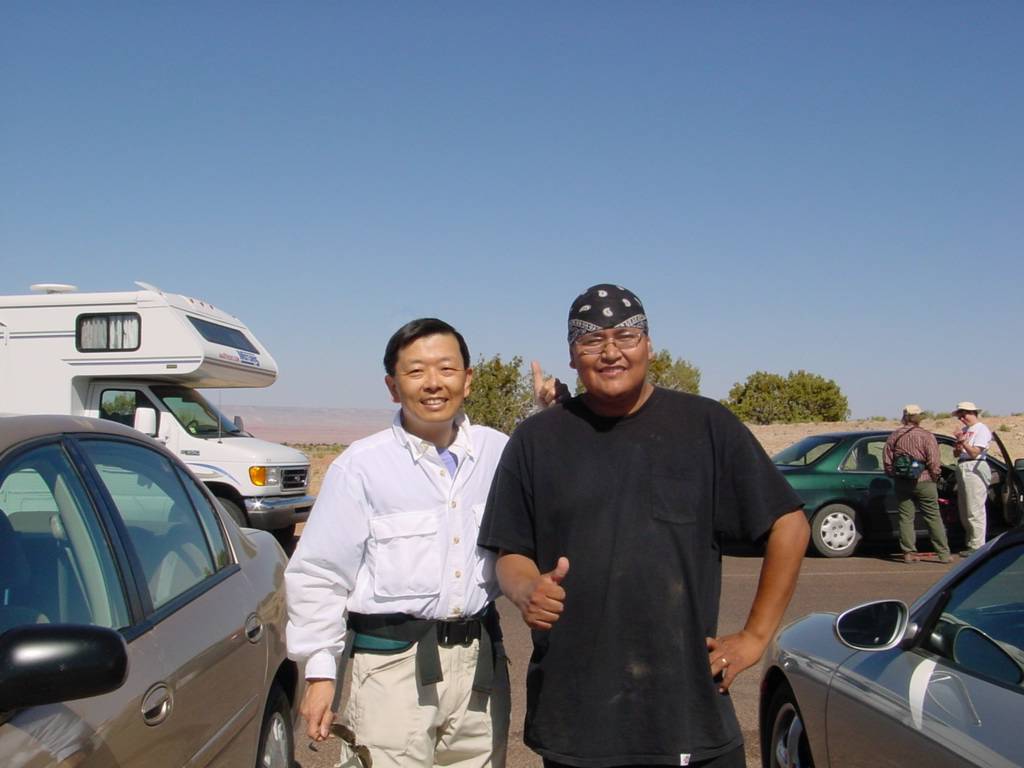
It’s all connected to the conversation with Henry, the young Navajo man met in Arizona. As we talked on that climb back to the mesa top in Canyon de Chelly (see earlier posting), the subject had turned from work to life-direction, his and mine. He had recognized that the “runnin’ ‘round” on his woman and doing “crazy stuff” when he was younger – this is someone who fathered his first child at sixteen – was an empty life (his words also). In his emptiness and struggle for direction and meaning – not surprising given the opportunities in the Reservation – he had turned toward traditional Navajo religion and not found comfort. Then he tried Christianity and had found God, in the form of a Pentecostal congregation. Now his faith gave him a center, which helped him be a partner to his girlfriend and mother of the four children.
He said all this, at once matter-of-factly and with dignity, in a soft-spoken voice as we made our way, sometimes side-by-side, sometimes single-file, depending on the width of the trail. Speech, on both our parts, was a little halting from the exertion, which increased as we progressed up the canyon-side. (The sun was closer to noon-height and strength by this time, and I was glad to be wearing the silly-looking desert-cap with the “skirt” for the back of neck, though I looked nothing like Gary Cooper in “Beau Geste”.) Now and then, he would turn to talk to his son, who had yet to peak a word. (I had offered him one of my water bottles, since they weren’t carrying any, and he refused it twice, only accepting after a glance to and permission from Henry.) When I commented on the silence, wondering how much it had to do with the problems -- drinking and “mental”-- that Henry had mentioned, he said that the son was quiet around strangers, but would probably ask a lot of questions once they were alone. He was an alert little boy, with inquisitive eyes that showed more going on than verbalized. (He remained silent, even when we had reached the cars and I handed him my digital camera to take a photo of Henry and me, but listened attentively to my instructions and followed them perfectly. When Henry instructed him to say good-bye properly, the handshake was firm and he locked eyes with no hint of shyness.)
Earlier in the hike, when we were still exchanging basic information, i.e. the “where” and “what” of each other, I had shared with Henry that I had left my firm and that one purpose of my trip was to ponder the next stage. Now, after telling how new-found faith had turned his life around, he said to me, in his lightly accented and slightly rhythmic voice: “You look like – I know you are – a smart man; I know you can do a lot good with what you know. Maybe I was put on your path for something; maybe to tell you that.” And then, turning fully around, as we stopped in the shade some rocks (I needed it): “Maybe it will fill the emptiness inside, you know?”, at the same time touching his chest/heart with his right hand. I didn’t know how to respond and it took me a couple of seconds to say: “Maybe you’re right.”
Near the beginning of this trip, I had made a less-than-serious comparison, in an email to a friend, to perhaps being a later-day Paul on the road to Damascus and maybe finding faith. I have hoped, all my life, to receive a “sign” because, deep inside, I want divine guidance (for one thing, it alleviates personal responsibility and the burden of choice). However, being a skeptic and a cynic (albeit an oxymoronic one, i.e. a cynical Romantic), potential “signs” have always been terribly Delphic, i.e. ambiguous and subject to any desired interpretation.
What Henry gave words to, I had already been thinking for several dozen steps. Was it more than coincidental, those words from a Native American when I was already thinking about ways for applying my experience and skill sets on behalf of that group? Could a “sign” be any more explicit? These are the questions that have been uppermost in my mind during the empty stretches of road since that day. (The roads haven’t been empty since reaching – and leaving – LA, so the questions have been less in the foreground. I suspect they will become stronger again in the stretch homeward after next week.)
We exchanged contact information in the parking lot – I will be sending his son copies of the photos – and then we said good bye after a hug (with Henry) and the aforementioned handshake with his son. I know that we will be in touch.
I only arrived in Carmel two days ago, yet it feels much longer. The room at The Carriage House Inn is spacious and comfortable, the management very friendly, and the location can’t be beat: secluded yet just a block from the main intersection in the “downtown” area. Carmel is only one square mile, so it’s amusing to think of it as having a downtown. However, those few square blocks that qualify are a warren of little courtyards and alleys crammed with a mixture of boutiques for visitors and services for locals. It’s a good place to avoid if both your credit card limit and tolerance for “tchotkes” is low. These four nights in Carmel – tonight is the third one -- are roughly at the half-way mark but feel more like a destination. I am simultaneously rested and tired: I miss the familiar in Philadelphia yet feel detached from it.
Unlike past transcontinental trips where the transition from East Coast to West Coast was almost magical, covered in six hours on an airplane, this one has taken eleven days. Instead of being “driven” in a DC-10 or 737, I’ve been at the wheel of the 4,156 miles between home and Los Angeles. Both these differences made for a gradual transition, of an acceptance of successive alien environments as being the norm, until being in the unfamiliar felt natural. (Hmm…sounds like the proverbial way to keep a frog from jumping out of the cooking pot:: start with cold water, turn up the heat slowly, and it will be boiled before it realizes it…) My sense of distance – and distancing – from Philadelphia is unlike any felt before, even when physically farther, like during trips to China. Knowledge that my old workplace, part of the familiar, will not be there upon return also makes “home” feel less like “home” and adds to the theme of the trip being a search.
It’s all connected to the conversation with Henry, the young Navajo man met in Arizona. As we talked on that climb back to the mesa top in Canyon de Chelly (see earlier posting), the subject had turned from work to life-direction, his and mine. He had recognized that the “runnin’ ‘round” on his woman and doing “crazy stuff” when he was younger – this is someone who fathered his first child at sixteen – was an empty life (his words also). In his emptiness and struggle for direction and meaning – not surprising given the opportunities in the Reservation – he had turned toward traditional Navajo religion and not found comfort. Then he tried Christianity and had found God, in the form of a Pentecostal congregation. Now his faith gave him a center, which helped him be a partner to his girlfriend and mother of the four children.
He said all this, at once matter-of-factly and with dignity, in a soft-spoken voice as we made our way, sometimes side-by-side, sometimes single-file, depending on the width of the trail. Speech, on both our parts, was a little halting from the exertion, which increased as we progressed up the canyon-side. (The sun was closer to noon-height and strength by this time, and I was glad to be wearing the silly-looking desert-cap with the “skirt” for the back of neck, though I looked nothing like Gary Cooper in “Beau Geste”.) Now and then, he would turn to talk to his son, who had yet to peak a word. (I had offered him one of my water bottles, since they weren’t carrying any, and he refused it twice, only accepting after a glance to and permission from Henry.) When I commented on the silence, wondering how much it had to do with the problems -- drinking and “mental”-- that Henry had mentioned, he said that the son was quiet around strangers, but would probably ask a lot of questions once they were alone. He was an alert little boy, with inquisitive eyes that showed more going on than verbalized. (He remained silent, even when we had reached the cars and I handed him my digital camera to take a photo of Henry and me, but listened attentively to my instructions and followed them perfectly. When Henry instructed him to say good-bye properly, the handshake was firm and he locked eyes with no hint of shyness.)
Earlier in the hike, when we were still exchanging basic information, i.e. the “where” and “what” of each other, I had shared with Henry that I had left my firm and that one purpose of my trip was to ponder the next stage. Now, after telling how new-found faith had turned his life around, he said to me, in his lightly accented and slightly rhythmic voice: “You look like – I know you are – a smart man; I know you can do a lot good with what you know. Maybe I was put on your path for something; maybe to tell you that.” And then, turning fully around, as we stopped in the shade some rocks (I needed it): “Maybe it will fill the emptiness inside, you know?”, at the same time touching his chest/heart with his right hand. I didn’t know how to respond and it took me a couple of seconds to say: “Maybe you’re right.”
Near the beginning of this trip, I had made a less-than-serious comparison, in an email to a friend, to perhaps being a later-day Paul on the road to Damascus and maybe finding faith. I have hoped, all my life, to receive a “sign” because, deep inside, I want divine guidance (for one thing, it alleviates personal responsibility and the burden of choice). However, being a skeptic and a cynic (albeit an oxymoronic one, i.e. a cynical Romantic), potential “signs” have always been terribly Delphic, i.e. ambiguous and subject to any desired interpretation.
What Henry gave words to, I had already been thinking for several dozen steps. Was it more than coincidental, those words from a Native American when I was already thinking about ways for applying my experience and skill sets on behalf of that group? Could a “sign” be any more explicit? These are the questions that have been uppermost in my mind during the empty stretches of road since that day. (The roads haven’t been empty since reaching – and leaving – LA, so the questions have been less in the foreground. I suspect they will become stronger again in the stretch homeward after next week.)
We exchanged contact information in the parking lot – I will be sending his son copies of the photos – and then we said good bye after a hug (with Henry) and the aforementioned handshake with his son. I know that we will be in touch.
Subscribe to:
Posts (Atom)